
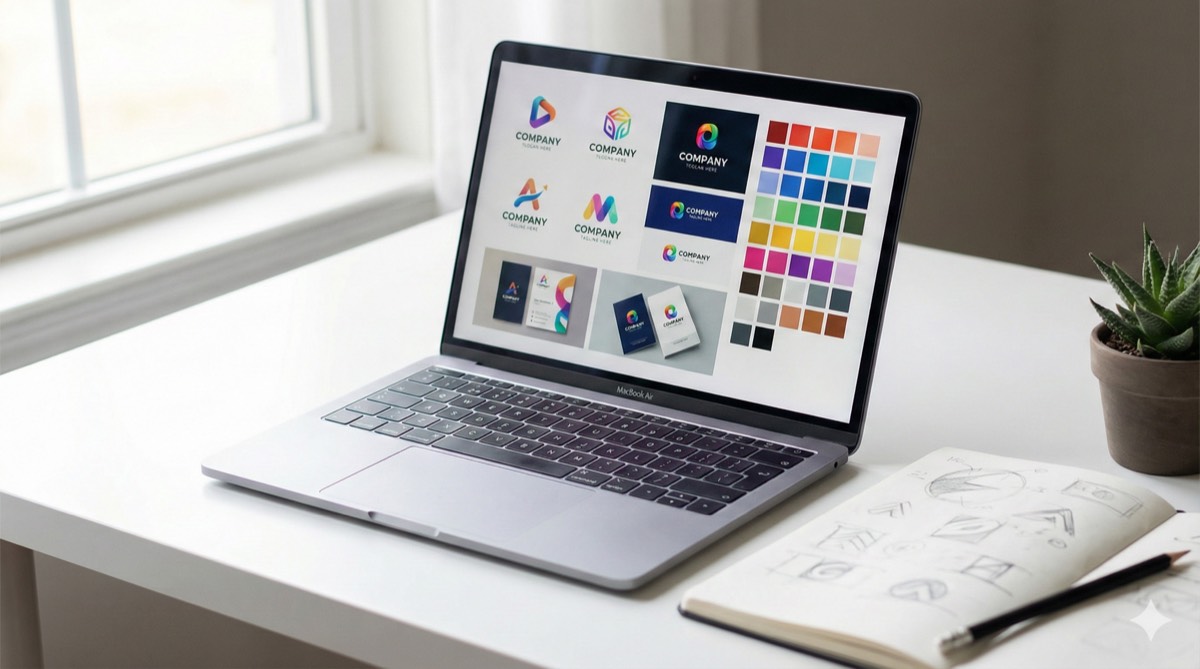
Pull up ten home care agencies in any metro area right now, and seven or eight will have some version of the same logo: a heart, a pair of hands, maybe both together, almost certainly in blue. Generic "heart and hands" logos are making most agencies invisible.
It's costing them clients and caregivers alike, though most owners have no idea.
Some call it "blanding." The industry has a serious visual identity problem. Audits of hundreds of agency sites reveal the same pattern over and over.
Why Every Home Care Logo Looks the Same
The math behind this problem is actually pretty simple. Recent data from Activated Insights (formerly Home Care Pulse) shows that the average agency spends about 1.1% of revenue on marketing. The U.S. Small Business Administration recommends 7-8% for small businesses with revenues under $5 million.
That gap tells you everything you need to know about where branding falls on most owners' priority lists.
And honestly? I get it. When you're dealing with scheduling chaos at 6 AM and a caregiver just called out sick for the third time this month, spending mental energy on whether your logo "communicates your brand values" feels absurd.
So when owners finally do get around to addressing their visual identity, they reach for the fastest, cheapest option available, which usually means Fiverr or some template-based logo maker.
The result is that agencies providing wildly different levels of care end up looking identical. A specialized dementia care provider with 20 years of experience appears no different from someone who started their agency six months ago and is running it out of their spare bedroom.
The generic heart-and-hands logo doesn't discriminate. It just makes everyone invisible.
What a Stressed-Out Daughter Actually Sees
Picture this scenario:
A woman in her late 40s is sitting in a hospital cafeteria, discharge papers in hand, while her father waits in a bed upstairs. She's got maybe 48 hours to figure out home care before he comes home, and she's Googling agencies on her phone between bites of a terrible sandwich.
She's not reading your mission statement. She's not carefully comparing your services to the competitor three listings down. She's making snap judgments based on how professional you look, whether your reviews seem legitimate, and whether anything about your brand makes her feel like you actually know what you're doing.
When stakes are high, people scrutinize harder. Your first impression matters more than in almost any other industry.
And when every agency in her search results has the same blue heart logo, she has no way to differentiate. So she picks based on whoever has more Google reviews, whoever is closest, or whoever answers the phone first.
Your brand did nothing to help you win that client.
How Branding Affects Caregiver Recruitment
Here's where it gets interesting, and where most branding advice completely misses the point.
Your logo, your website, your overall visual identity? Caregivers notice these things too. Maybe more than clients do.
A pattern emerges when looking at Glassdoor and Indeed reviews. The agencies with higher ratings almost always have employees mentioning things like "professional," "established," or "feels like a real company."
The ones with lower ratings? Words like "disorganized," "sketchy," and "felt like a scam" come up repeatedly. Sometimes before the reviewer even mentions pay or scheduling.
Visual branding doesn't cause those perceptions by itself. But it reinforces them.
Think about a CNA who just interviewed at two different agencies on the same day. One has a polished website, consistent colors across their materials, and a logo that doesn't look like it was made in Microsoft Word. The other has a grainy JPEG from 2010 and a website that hasn't been updated since the Obama administration.
Which one does she trust with her career?
The latest Activated Insights Benchmarking Report shows caregiver turnover hit 79.2% nationally. You cannot afford to lose qualified applicants because your online presence makes you look like a fly-by-night operation.
Don't have time to figure out your brand positioning?
We help home care agencies develop distinctive brands that attract both clients and caregivers. Book a free strategy call to see if we're a fit.
Home Care Branding That Works: Real Case Studies
TheKey (formerly Home Care Assistance) went through a major rebrand a few years back. They didn't just change their logo; they rethought their entire visual identity and digital presence.
According to Cardinal Digital Marketing, who worked on the project, they saw total conversions increase by 225%
That's not a typo.
Now, TheKey is a national brand with resources most independent agencies don't have. But the principle applies at every scale: distinctive branding that reflects something real about who you are will outperform generic branding every single time.
Consider Nurse Next Door's approach. They deliberately went with bold pink branding and highly visible cars. Pink in senior care sounds counterintuitive, which is exactly why it works. When everyone else is blue, being pink makes you impossible to ignore.
Their franchise owners consistently report that the brand recognition helps them establish credibility faster in new markets.
HCAOA data suggests their member agencies generate something like 45% more revenue than non-members, and part of that comes from access to marketing resources and branding guidance. It's not the only factor, obviously, but it's not nothing either.
Beyond Hearts and Hands: Logo Alternatives That Work
One piece of advice on branding stands above the rest:
Figure out what actually makes you different before you talk to any designer.
Hearts and hands persist as logo elements because they're safe. They communicate "care" in the most generic possible way, which is exactly the problem. They tell potential clients and caregivers nothing specific about you.
Do you specialize in dementia care? Serve a particular cultural community? Focus on companionship rather than medical tasks? Have caregivers with specialized training?
Whatever it is that makes your agency worth choosing over the dozen other options in your zip code, that's what your visual identity should hint at.
"Hearts and hands in healthcare logos are overused to the point where they make your business look generic, lazy, or old-fashioned."
That stings, but it's accurate. According to research from 99designs, roughly 85% of healthcare logos feature blue as a primary color, which tells you how much differentiation opportunity exists just by choosing a different palette.
The Activated Insights folks have a good line about this: hire a professional, be consistent across all your materials, and for the love of God, don't design your own logo to save money.
A Fiverr template might save you $200 upfront, but it costs you thousands in lost differentiation over the life of your agency.
Before talking to any designer, answer these questions:
1. What's your specialization?
Dementia care? Post-surgical? Companionship? Hospice support? If you serve everyone, you differentiate from no one.
2. Who do you actually serve?
Cultural community? Veterans? A specific condition? Geographic niche? Write down the one thing your best clients have in common.
3. What do clients say about you?
Pull 5 reviews. What words repeat? That's your brand language, not corporate mission-speak.
4. What makes your caregivers different?
Special training? Tenure? Certification levels? This matters for recruitment too.
5. What color is NOT on any competitor's logo in your zip code?
If everyone's blue, consider literally anything else. Green, purple, orange, pink. Stand out.
The Uncomfortable Bottom Line
I should be honest about something: a logo redesign won't save a bad agency.
If your operations are chaotic, if caregivers are leaving in droves, if clients complain constantly about communication, then the fanciest rebrand in the world won't help you.
Activated Insights
But if you are running a good operation, if you're genuinely committed to quality care, if you treat your caregivers well, then branding becomes the amplifier. It takes what you're already doing and makes it visible to the people who need to see it.
The hearts and hands cliche persists because most agencies haven't done the work to figure out what makes them different. When you don't know your own story, you default to symbols everyone recognizes.
That's not a branding problem. It's a strategy problem, and it shows.
The Ultimate Marketing Checklist for Home Care
15-point GBP audit, review generation templates, recruitment ad examples, website conversion checklist, and social media calendar.
Get the Free ChecklistWant Us to Handle Your Rebrand?
Everything in this article? We do it for home care agencies every day. Logos, websites, brand positioning, the works.
If you'd rather get it done right without the learning curve, let's talk.
Get a Free Strategy Call15 minutes. No pitch. Just an honest look at whether we can help.
Do the work. Define what makes you different. Then build a visual identity that communicates it in the time you have before someone scrolls past.
Because three seconds is all you get.